To understand the controversy over First Amendment and voting rights of college students in the city of Radford, Virginia, we have to go back in time. Way back, when the issue was first thought to have been resolved.
- 1970 — Census begins counting students as part of college towns
- 1971 — Voting rights advocates point to college student residency (9 – 12 months)
and the fact that students pay taxes and are affected by the local laws of college towns
- 1979 — Symm v United States — The Supreme Court affirms that college students have the right to vote in their college towns.
- 2009 — City of Radford declines to move elections from mid-May (when the semester is over ) to November due to concerns about student voting.
- 2012 — Early voting permitted in Virginia.
- 2020 — Widespread use of mail-in voting due to Covid pandemic.
- 2021 — Virginia General Assembly moves all local elections to November.
So, until very recently, it was difficult if not impossible for students to vote in college towns. And note that it only took four decades for a Supreme Court decision to influence voting policies in Radford.
And today there are still plenty of people who don’t want Radford students to vote in Radford.
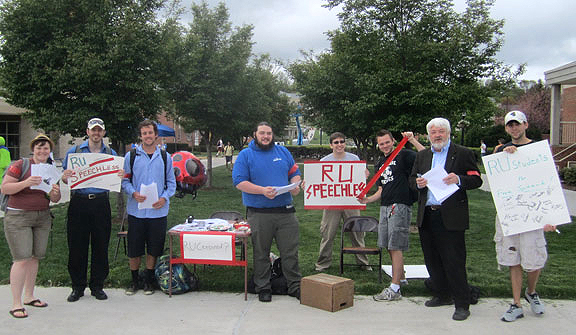
But why? It’s not true that college students have no stake in local elections. If a Radford city ordinance forbids students from exercising their First Amendment rights, then the students, rather obviously, have a stake in the way the city is managed. They have every right — and duty — to vote in local elections.
——
For a short history of college students voting, see Timothy Reese Cain, “Isnt it terrible that all these college students are voting?” May 2024, History of Education Quarterly 64(3):319-345