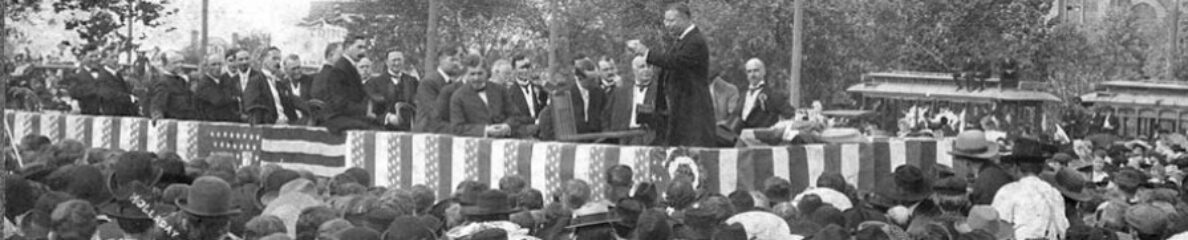
Are college students Radford citizens?

To understand the controversy over First Amendment and voting rights of college students in the city of Radford, Virginia, we have to go back in time. Way back, when the issue was first thought to have been resolved.

  • 1970 — Census begins counting students as part of college towns
  • 1971 — Voting rights advocates point to college student residency (9 – 12 months)
    and the fact that students pay taxes and are affected by the local laws of college towns
  • 1979 — Symm v United States — The Supreme Court affirms that college students have the right to vote in their college towns.
  • 2009 — City of Radford declines to move elections from mid-May (when the semester is over ) to November due to concerns about student voting.
  • 2012 — Early voting permitted in Virginia.
  • 2020 — Widespread use of mail-in voting due to Covid pandemic.
  • 2021 — Virginia General Assembly moves all local elections to November.

So, until very recently, it was difficult if not impossible for students to vote in college towns. And note that it only took four decades for a Supreme Court decision to influence voting policies in Radford.

And today there are still plenty of people who don’t want Radford students to vote in Radford.

But why?  It’s not true that college students have no stake in local elections.  If a Radford city ordinance forbids students from exercising their First Amendment rights, then the students,  rather obviously,  have a stake in the way the city is managed. They have every right — and duty — to vote in local elections.

——

For a short history of college students voting, see Timothy Reese Cain, “Isnt it terrible that all these college students are voting?”  May 2024, History of Education Quarterly 64(3):319-345

Dixie University loses lawsuit over Greek letters

ST. GEORGE, Utah, May 5, 2015—Dixie State University has announced that it will suspend the unconstitutional speech codes that three students challenged in a First Amendment lawsuit filed in March. The lawsuit, which is supported by the Foundation for Individual Rights in Education (FIRE), targeted Dixie State’s unconstitutional flyer approval process, posting policies, “free speech zone,” and club event policies—all of which are now suspended.

In addition to suspending the speech codes, Dixie State President Richard B. Williams announced in an email yesterday to the campus community that the university will permanently revise its policies. In his email, President Williams stated that Dixie State is a place “where even unpopular answers, seemingly absurd ideas, and unconventional thought are not only permitted, but even encouraged.”

FIRE will continue to monitor developments at Dixie State closely to ensure that the university’s apparent recognition of First Amendment principles translates into meaningful policy reform.

(MORE)

Freedom of Association bills pass Virginia assembly

Both houses of the Virginia General Assembly have passed “Freedom of Association”  bills that allow religious and political groups at state colleges to restrict membership to individuals who are “committed” to the organization’s mission. Opponents of the legislation said the bills are thinly veiled attempts to let subsidized campus groups discriminate against gay students.

“It’s pretty simple: A Democratic club shouldn’t have to accept a Republican as a member and members of a religious group should be able to expect that their leadership will share the group’s core commitments,” Mark Obenshain, a state senator from Harrisonburg, told the Roanoke Times.

The idea of freedom of association was supported in a US Supreme Court case in 1995, Hurley v. Irish-American Gay, Lesbian and Bisexual Group of Boston. But the case did not involve state funding of the groups in question, and the Supreme Court also said that Boston gays had a right to stage their own separate parade.